
Key takeaways
- One affected fixture and several affected fixtures require different questions.
- The access point and pipe condition influence the cleaning method.
- Tell the contractor about any chemicals already used.
Start with the pattern
Notice whether the problem is confined to one fixture or appears across the home. A kitchen sink that drains slowly while nearby fixtures behave normally may involve a local branch. Water returning through a low drain while another fixture runs can suggest a shared restriction. These observations guide an assessment; they do not prove the cause.
Share when the issue began, any recent clearing and whether the drain ever works normally. If a previous visit produced camera footage or notes, make them available. Tell the contractor about chemical drain products before anyone opens the line.
For a problem involving fixtures in different rooms, start with several drains clogged at once before treating each fixture as a separate problem.
Match the work to the drain
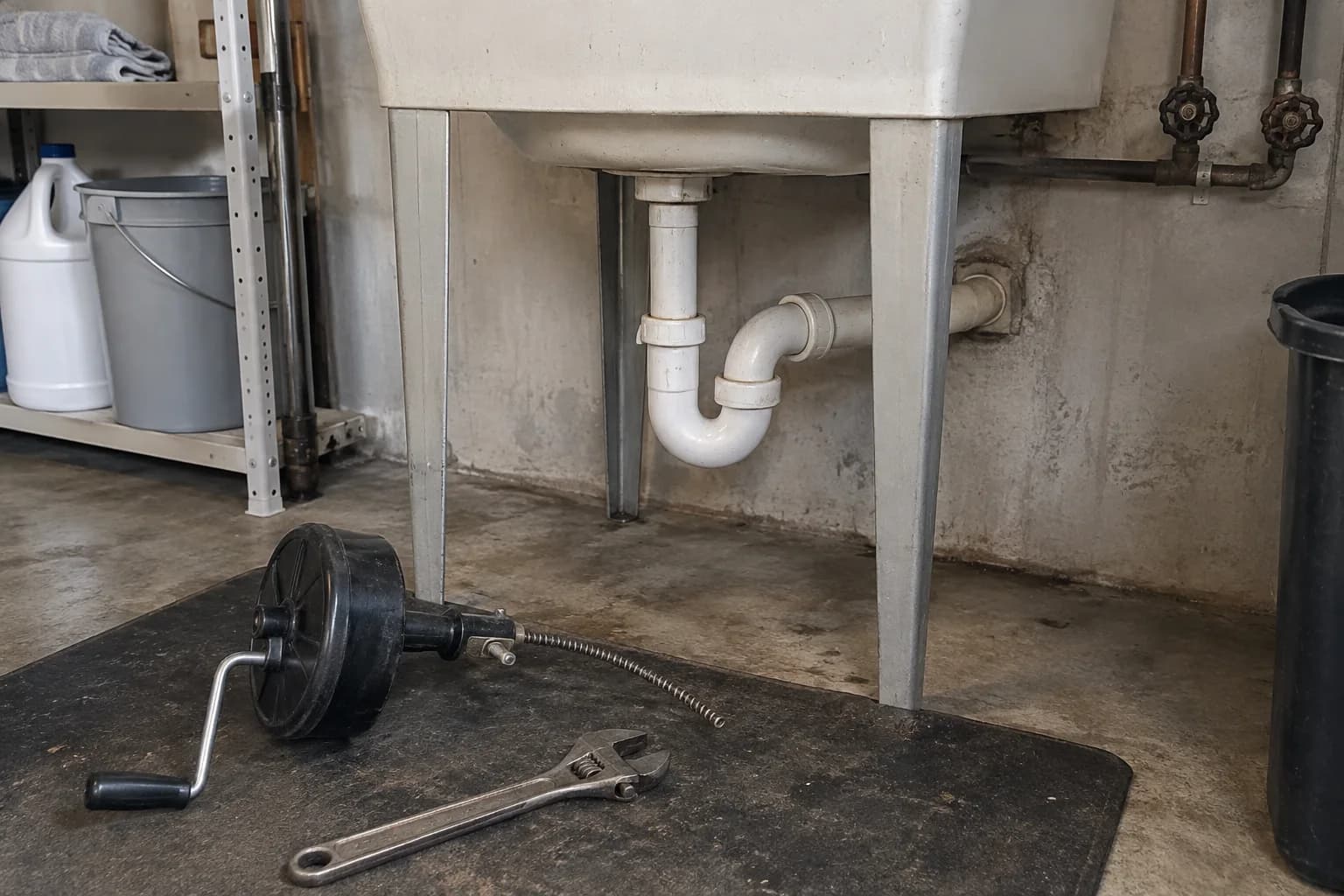
Professional drain clearing can involve different equipment for a sink branch, toilet, tub or main sewer. A larger machine is not automatically a better choice. Access, diameter, bends, pipe condition and the suspected obstruction all matter.
Ask whether the quote covers the specific fixture line or the main sewer, how clearing will be checked and what happens if the blockage cannot be reached. If the symptoms return, keep the dates and observations rather than assuming the same service is always the answer.
Which drains can be included in a visit?
Kitchen sinks, bathroom sinks, tubs, showers, toilets and basement floor drains connect to different parts of the drainage system. A service request should identify every fixture with symptoms, even if one fixture is the main reason for the call. This helps distinguish a small branch-line problem from a shared restriction farther downstream.
Ask the contractor to state which fixtures or pipe section the estimate covers. Clearing one sink branch does not automatically include another bathroom or the main sewer. If access to a second line is needed, the contractor should explain the reason and price before expanding the work.
How the cleaning method is chosen
The contractor considers the access opening, pipe size, bends, condition and suspected material before selecting equipment. A small fixture drain can require a different cable and attachment from a larger sewer. Water jetting may be considered when deposits call for a more extensive cleaning approach and the piping is suitable.
More force is not a substitute for understanding the line. A tool that stops repeatedly may be encountering an obstruction, a difficult fitting or a condition that needs further assessment. Ask what the contractor has established and what remains uncertain before authorizing repeated attempts or a different method.
A useful flow check is part of the conversation
Once the obstruction has been addressed, the contractor can evaluate drainage under appropriate controlled use. Explain any pattern that originally produced the backup, such as the kitchen sink filling when the dishwasher discharged. A brief check at the wrong fixture may not reproduce the situation that brought you to the phone.
If the drain improves but still empties slowly, say so before the visit ends. Ask whether further cleaning, a different access point or inspection is recommended. Keep the service notes if the problem returns; the time between visits and the fixtures involved can be useful evidence.
What affects the drain-cleaning estimate
Accessible piping and a clearly isolated fixture can lead to a different scope from a concealed branch or a whole-home backup. Ask about access work, fixture removal, camera inspection and any after-hours charge. Confirm whether the quoted service includes the complete proposed task or only the initial assessment.
For the visit, clear the immediate work area where it is safe, identify previous repairs and mention any drain products used. Do not add another chemical product while waiting. Avoid running more water into a fixture that is already holding water, and use the emergency phone option if wastewater starts returning into the property.
Questions you may have
Is drain cleaning the same as sewer rodding?
The terms overlap in everyday use. Here, drain cleaning covers fixture and branch drains, while the homepage focuses on main-sewer rodding. Confirm the line included in your quote.
Can a drain be clogged even if it eventually empties?
Yes. Slow emptying can be a symptom of a restriction, although the symptom alone does not identify its location or cause. Describe how long the water remains and whether nearby fixtures behave normally.
Will cleaning fix a cracked or sagging pipe?
Cleaning addresses material in the line. It does not restore a broken pipe or correct its slope. If structural conditions are suspected, ask what evidence supports further inspection or repair.
How do I reduce repeat kitchen and bathroom clogs?
Keep grease, wipes and other nonflushable material out of drains. Use suitable strainers and clean them regularly. If symptoms continue despite ordinary care, ask for an assessment of the actual line rather than assuming household habits are the only cause.