
Key takeaways
- The overflow location is not always the blockage location.
- Describe laundry, toilet use or rain associated with the event.
- Leave backed-up cleanouts to the contractor.
Give the timing and context
Explain whether the floor drain overflows during normal fixture use, when laundry empties or after rainfall. Mention other slow or backed-up drains. Those details help the contractor decide which connections and lines need attention.
Do not assume clearing the opening at the floor will solve a downstream restriction. The drain may simply be a low point where water can escape.
If the overflow follows a laundry cycle, read washing-machine and floor-drain backups before assuming the floor-drain opening is the source of the restriction.
Discuss access and scope
Identify any known cleanout without opening it. Move stored items only where the area is safe and dry. Tell the contractor about recent cleaning, camera findings or previous public-sewer concerns.
Ask whether the estimate covers the floor-drain branch, a main sewer line or investigation to establish the affected section. Confirm how flow will be evaluated afterward and what happens if conditions point to the municipal system rather than private piping.
Why the lowest drain may show the problem first
A floor drain can be where returning wastewater becomes visible even when the restriction is beyond its connection. Describe whether the event followed laundry, toilet use, several fixtures operating together or rainfall. The location of the overflow alone does not establish the location of the blockage.
Tell the contractor about any other affected drains and whether the floor drain works normally between events. A problem limited to water reaching the floor-drain opening raises different questions from wastewater rising out of it. Be clear about the direction and timing of the water you observed.
Identify the drain system before choosing work
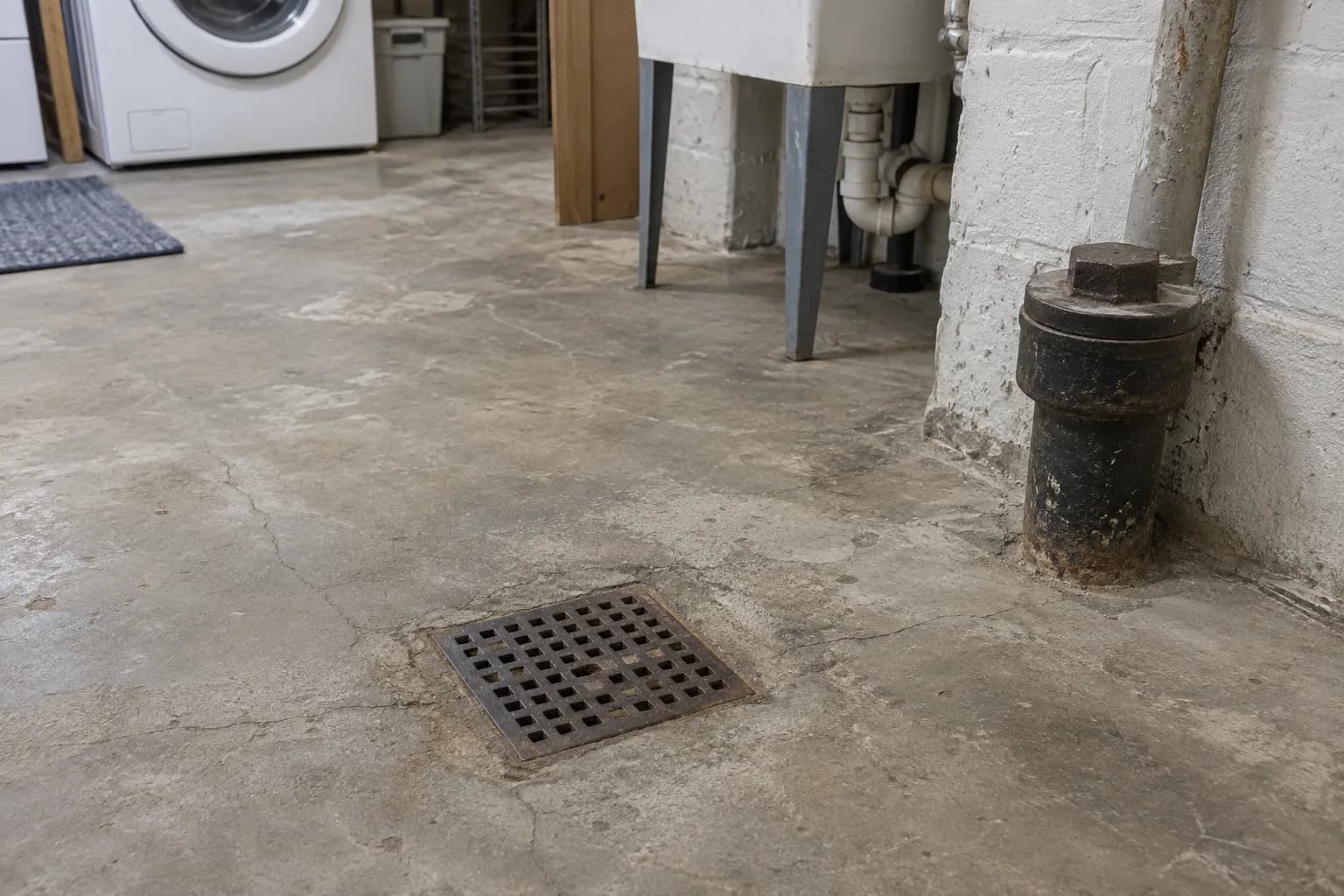
Basement drainage arrangements vary. A floor drain, a sump pit and a sewer cleanout are different components, and they should not be treated as interchangeable access points. Describe what you know and leave uncertain connections for the contractor to identify. Do not remove a cap from a line that may be backed up.
The estimate should state whether the proposed work concerns the floor-drain branch, a shared building drain or the private sewer. If the contractor suspects a municipal issue, ask what observations support that concern and what information should be provided to the appropriate public utility contact.
A practical assessment of access and drainage
The contractor looks for a suitable opening and considers the affected fixtures before selecting equipment. Stored items, finished walls or an inaccessible cleanout can change the scope. Describe those conditions when arranging service rather than assuming every floor-drain problem can be reached through the grate.
After clearing, discuss how the original trigger will be evaluated safely. If laundry discharge was associated with the backup, that history matters. A drain appearing empty at the end of a visit is different from confirming how the connected system responds during appropriate controlled use.
Prepare the basement and keep a useful record
Keep people and pets away from wastewater. Move belongings only from safe, dry areas and avoid electrical equipment near standing water. Do not add water to see whether the drain has improved. Let the contractor know about any chemical drain products and previous visits.
Record the date, weather context, fixtures in use and where water appeared. After the visit, keep the work description and any inspection material. If the event repeats, those details help distinguish a return of the same symptoms from a different problem and support a more focused follow-up conversation.
Questions you may have
Is a floor-drain backup caused by the drain itself?
Sometimes, but not always. A restriction beyond the connection can cause water to return through the floor drain. A site assessment is needed.
Will cleaning the grate fix a sewer backup?
Clearing debris at the surface is different from addressing a restriction downstream. If wastewater is rising through the drain, request an assessment of the connected system.
Should I plug the floor drain to stop water coming up?
Do not alter or seal a backed-up drain without a contractor assessing the drainage arrangement. Describe the active backup and avoid further water use while arranging help.
What if the backup happens during rain?
Report that timing along with fixture use and any other affected properties. Rain association alone does not establish a particular cause; private plumbing and public-system questions may need different assessments.