
Key takeaways
- The camera can document only the portions it can reach and see.
- Standing water, debris or a blockage may limit visibility.
- Confirm whether footage, locating and a written summary are included.
What a camera adds to the conversation
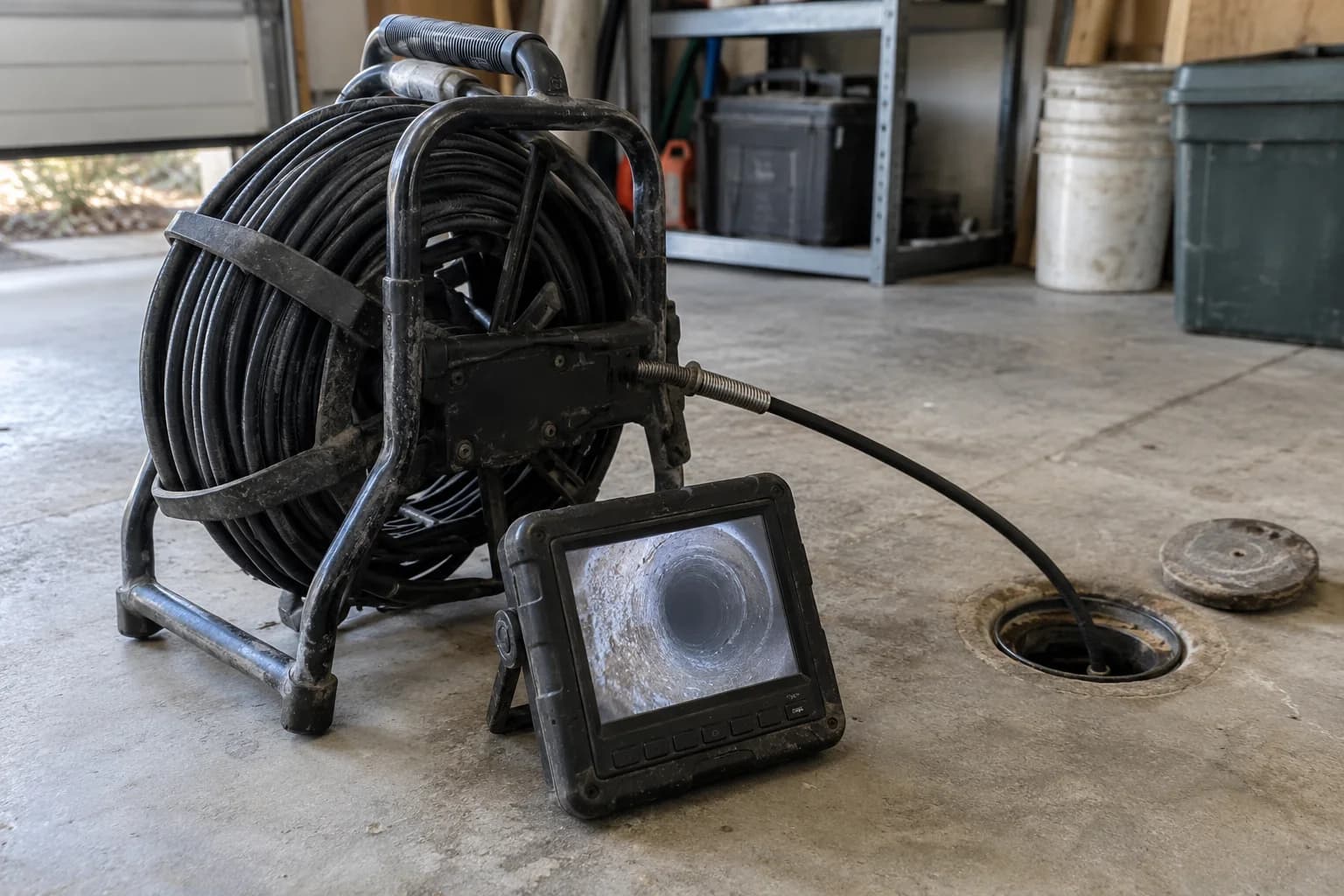
An inspection camera sends images from inside the line to a display. Visible joints, deposits, root intrusion and some pipe defects may be documented. This gives you and the contractor a shared basis for discussing further work instead of relying only on symptoms.
The result still has limits. A camera may stop at an obstruction, and water or deposits may conceal the pipe surface. Ask the inspector to distinguish an observed condition from an interpretation, and to explain any portion that was not inspected.
Before booking a scope, review what a sewer camera inspection can show so the inspection boundaries and deliverables are clear.
Agree on the deliverables
Before scheduling, identify the starting access point and the portion of the line to be examined. Ask whether you will receive a recording, still images, distance references and a written explanation. Locating a camera head from the surface may be a separate service.
Keep the report with the address, inspection date and contractor information. If additional work is suggested, request an explanation that connects the recommendation to specific observations. An inspection does not itself repair or clear the line.
When a sewer camera inspection is useful
An inspection can be worth discussing when a blockage repeatedly returns, when earlier clearing did not explain the cause, or when you need better records of an accessible sewer line. It may also form part of a property evaluation, with the inspection boundaries agreed in advance. The question is what you need the inspection to establish.
Tell the contractor whether the drain is currently working, when it last backed up and where previous work was performed. Bring any older footage or report. Comparing documented observations is more useful than assuming a new image explains every symptom or that the entire underground system has been examined.
How the inspection visit is planned
The contractor identifies an entry point and discusses the section to be inspected. Access may be through a suitable cleanout; arrangements can differ where a cleanout is hidden, missing or cannot be opened safely. Ask what access work is included and what requires separate authorization.
The camera is advanced only where the equipment and conditions allow it to travel. A blockage, tight fitting or poor visibility can limit the scope. If cleaning is recommended first, ask what it is intended to accomplish and whether the inspection will resume afterward as part of the same agreement.
Read the findings without jumping to a repair decision
Ask the contractor to show the location of an observed condition in the recording and explain the basis for the interpretation. For example, visible roots are a different finding from an assumption about why a slow drain occurred. Deposits or standing water may prevent a complete view of the pipe surface.
A report should be clear about the start and end of the inspected section and anything that was not visible. Where a repair is proposed, request a written explanation that ties the work to the findings. The purpose of the camera is to improve the information available for a decision, not to replace an explanation of the proposed work.
Footage, locating and written records
Confirm whether the price includes saved video, still images, distance references and a written summary. Ask how and when you will receive the files, and keep them somewhere you can retrieve later. If a location at the surface is needed for further work, confirm whether locating is included and what limits apply.
For a home purchase or managed property, agree who will receive the report and who can authorize additional services. Keep the contractor’s contact information with the recording. A second contractor reviewing the material will need to understand the access point, inspection direction and any stated limitations.
Questions you may have
Can a camera inspect a completely blocked line?
A blockage may stop travel or obscure the image. The contractor may recommend limited clearing first, then inspection when useful visibility is available.
Does a sewer scope include every drain in the house?
Not automatically. The inspection follows an agreed accessible pipe route. Ask whether fixture branches, the main building drain or a particular portion of the sewer are included.
Can a camera show whether the pipe is leaking?
A camera can document visible conditions, but an interior view does not establish every possible leak or condition outside the pipe. Ask what the findings do and do not demonstrate and whether another assessment is needed.
Should I keep the video if no repair is recommended?
Yes. A dated recording and clear summary can provide a useful reference if symptoms develop later. Keep the scope limitations with the footage so it is not mistaken for an inspection of areas the camera never reached.