
Key takeaways
- Avoid repeated flushing when the bowl is rising.
- Mention any object that may have entered the toilet.
- Water returning through a shower is relevant to the assessment.
Tell the contractor what changed
State whether the toilet worked normally before the event, whether other toilets are affected and whether there was a known object or nonflushable item involved. A problem isolated to the toilet may call for fixture-specific work. A shared-line issue can involve multiple drains.
Do not keep flushing to confirm a blockage when the bowl is close to overflowing. If wastewater is present, keep the area clear and request appropriate help.
When water also appears in the shower, see toilet backing up into a shower for the shared-line pattern to describe during your call.
Clarify the proposed access
A contractor may assess the fixture and connecting drain before selecting equipment. Ask whether the quote includes toilet removal if needed, reinstallation and any related materials. Do not assume those items are included in a general clearing price.
Once the line is working, ask what was established about the obstruction. If the cause remains uncertain or symptoms recur, preserve the service notes and consider whether more evidence is needed before repeating the same work.
An isolated toilet clog or a shared drain problem?
A single toilet that stopped immediately after a known item entered it gives the contractor a different starting point from several fixtures backing up together. Mention whether nearby sinks or the shower are affected, whether another toilet still works normally and whether a flush changes water levels elsewhere. These are observations, not a diagnosis.
If the bowl is rising toward the rim, stop flushing and keep the area clear. Water returning into a tub or basement drain should be included in the call even if the toilet first drew your attention. The work may need to address shared piping rather than the toilet alone.
What a toilet-clearing visit can involve
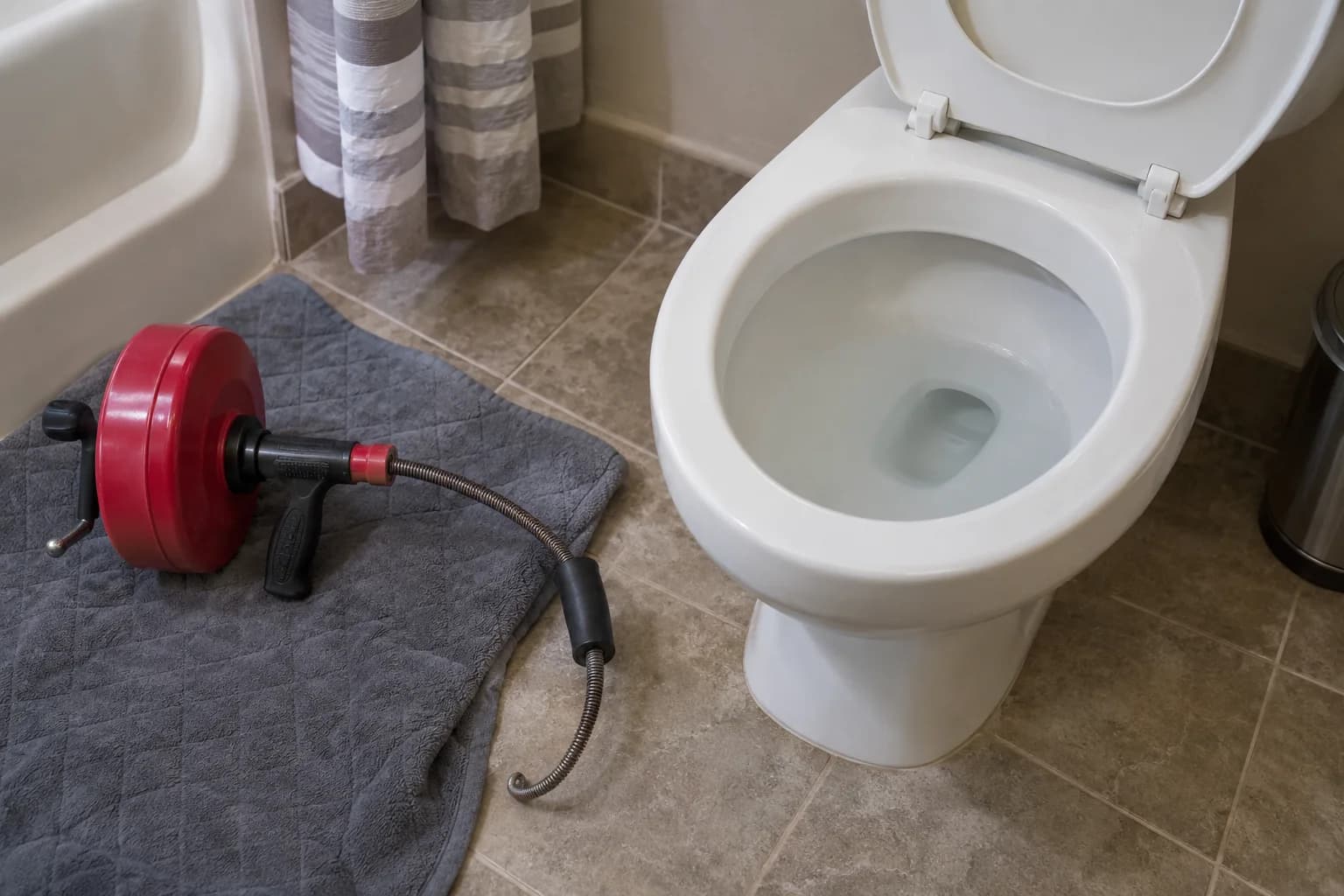
The contractor assesses the fixture and connected drain, then chooses equipment appropriate to the access and suspected obstruction. Some situations can be addressed through the fixture; others may require toilet removal or access elsewhere. Ask what the initial quote includes before that work begins.
Where removal is proposed, discuss reinstallation, the sealing connection, related materials and how leaks and operation will be checked afterward. If an object is suspected, tell the contractor what it may be. That information can affect the approach and the explanation of what was recovered or could not be confirmed.
Do not overlook a flushing-performance complaint
A weak or incomplete flush is not automatically proof of a drain blockage. Explain whether the issue is new, whether the bowl clears eventually and whether the tank or refill behavior has changed. The contractor can distinguish the drain-clearing request from a fixture operating problem that may need a different scope.
If the toilet was recently replaced or work was done in the bathroom, share that history. Keep earlier invoices or notes available. A symptom that began after another change deserves to be described rather than folded into a general request for “sewer cleaning.”
After clearing, check the original concern
Ask how normal operation will be evaluated and whether the contractor established the source of the obstruction. If the toilet was removed, ask about the checks made after reinstallation. Report any remaining backup elsewhere so it is not mistaken for an unrelated issue.
Only toilet paper and appropriate waste belong in a toilet. Keep wipes, hygiene products and other nonflushable items out. When repeated blockages continue, retain the service history and discuss whether there is a reason to assess the downstream line rather than assume each event is an isolated clog.
Questions you may have
Is a clogged toilet always a sewer problem?
No. An obstruction can be in the toilet or nearby piping. Other affected fixtures and the contractor’s assessment help distinguish the possibilities.
Does toilet removal always cost extra?
It depends on the agreed scope. Ask about removal, reinstallation, materials and testing before authorizing work, rather than assuming they are included in an advertised clearing charge.
What if a child flushed an object?
Tell the contractor what the object may be and when it happened. Avoid repeated flushing to push it farther along. An object-related obstruction may require a different approach from ordinary waste buildup.
Can I use another bathroom while waiting?
Tell the contractor which fixtures are affected and follow the guidance for your situation. If multiple fixtures are backing up, further water use can add to the problem; do not assume another room uses an unaffected line.