
Key takeaways
- Distinguish slow emptying from water returning into the fixture.
- Mention whether sink or toilet use changes the water level.
- Ask which part of the bathroom branch will be assessed.
Observe without adding more water
Note whether the tub or shower slowly empties after use or receives water when you are not using it. The timing is useful. A toilet flush, washing-machine discharge or another fixture may reveal that the problem is not confined to the tub.
Avoid repeated tests during an active backup. A clear account of what already happened is more useful than creating a larger overflow.
If water rises while the tub is not in use, our bathtub-backup guide helps distinguish returning water from ordinary slow emptying.
A fixture-specific service plan
Access can differ between showers and tubs. Ask the contractor what the proposed clearing involves and whether removing a drain fitting or opening another access point is necessary. The equipment needs to suit the line and protect the fixture.
Explain any previous attempts, including chemical products, and ask how the result will be checked. If water still returns when another fixture is used, report that specifically rather than describing the service as simply unsuccessful.
Slow drainage and returning water are different clues
A shower that slowly empties after use may have a restriction in its own drain or branch. A tub that receives water while someone flushes a toilet or empties a washing machine raises a shared-line question. Describe when the water appears, which fixture was used and whether other drains are also slow.
Do not run additional fixtures just to repeat the event. If the bathroom is already holding water, the most useful preparation is a clear account of the last occurrence. Tell the contractor whether the problem developed gradually, started suddenly or returned soon after an earlier clearing.
Tub and shower access can differ
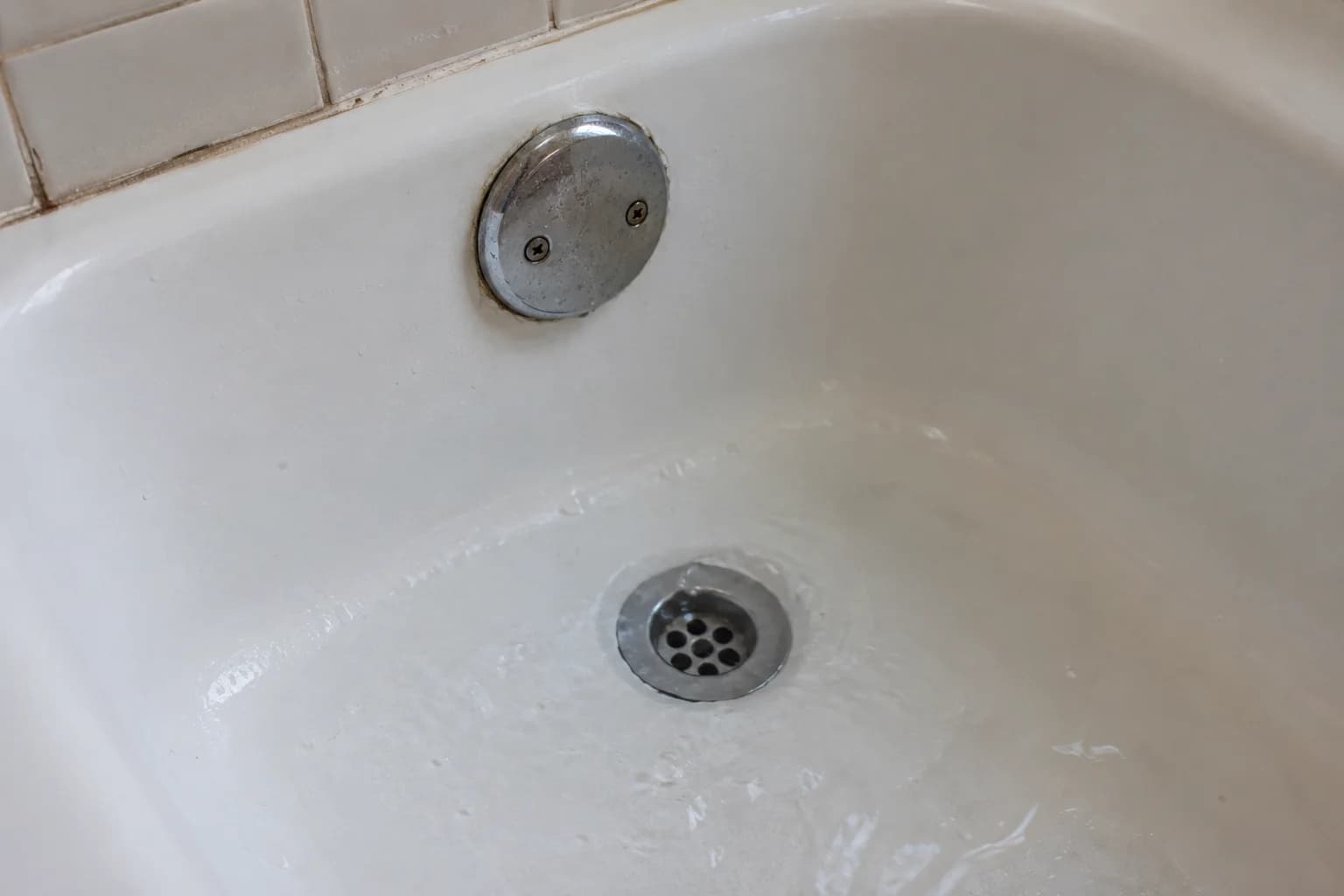
A tub’s drain and overflow assembly is different from the accessible opening in a shower. The contractor needs to choose an access point and equipment that suit the fixture and piping. Ask what fittings may need to be removed and whether reassembly is included in the estimate.
Where the affected branch is not accessible from the fixture, another entry point may be considered. The proposed work should make clear whether it covers the fixture connection, the bathroom branch or an assessment of shared downstream piping. This distinction matters when more than one bathroom has symptoms.
Hair, deposits and the limits of a quick clearing
Hair and other material around a drain opening can be part of the problem, but visible material does not establish the full condition farther into the branch. Ask what the contractor found and whether the work addressed only the immediate opening or the accessible downstream section.
If the drain remains slow after the visit, explain that before the work is closed out. If it works briefly and then backs up again, keep the timing and service notes. A recurring problem may justify further assessment instead of assuming another identical clearing will establish the cause.
Protect the bathroom and plan the follow-up
Remove toiletries, bath mats and movable items from the immediate work area where it is safe to do so. Tell the contractor about drain products used and any loose or leaking fittings you already noticed. Leave connected fittings in place until the assessment.
Once drainage is restored, use a suitable strainer and remove collected hair regularly. Report water returning when other fixtures operate; that pattern should not be dismissed as ordinary shower buildup. Ask how the original symptom was checked and what to do if the same pattern returns.
Questions you may have
Should a tub and shower have separate service requests?
If they are part of the same visit, describe both. The contractor can determine whether they share the affected piping or require separate work.
Does a shower backup mean the main sewer is blocked?
Not necessarily. A restriction can be local to the fixture or farther along shared piping. The timing and other affected fixtures help the contractor decide what needs assessment.
Can a drain cover or stopper be part of the issue?
Yes, the visible fitting can affect drainage, but it is only one part of the system. Ask the contractor to distinguish a fitting problem from a restriction in the branch.
Will the service damage the tub finish?
Ask how the contractor plans to access the line and protect the fixture and surrounding surfaces. The selected equipment and work area should be appropriate to the particular tub or shower.