Key takeaways
- Root removal and pipe repair are different scopes.
- A symptom alone does not confirm roots.
- Ask about inspection and a follow-up plan.
Confirm what is actually in the line
Recurring blockages can have several explanations. Before treating the problem as roots, tell the contractor about previous findings, nearby work and any available footage. An inspection may help document roots and the visible condition around their entry point.
A tree near a sewer route is not enough to establish the cause. Pipe location, connection details and observed conditions matter more than a guess based on landscaping.
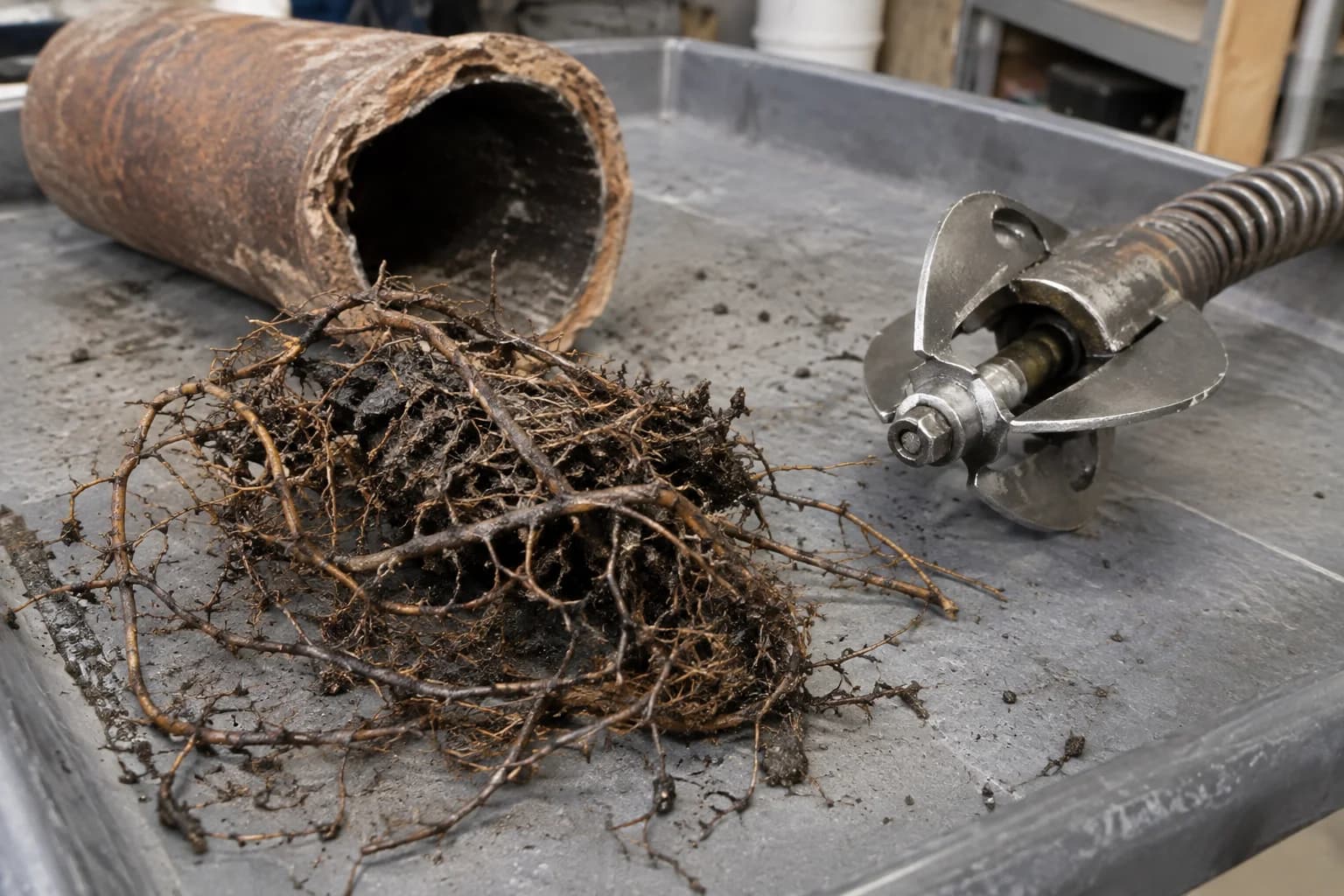
If roots have been documented, read about tree roots in sewer lines to separate clearing the obstruction from addressing the entry point.
Understand the limits of clearing
Mechanical tools or other suitable cleaning methods may remove an obstruction and restore flow. That work does not necessarily close the opening or joint through which roots entered. Ask whether the quote is for clearing only and what evidence would justify additional evaluation.
If roots were documented, request a record of the location, the work completed and any visibility limits. A maintenance interval should reflect the line and its history. It should not be presented as a permanent repair or a guarantee that roots cannot return.
Symptoms that justify checking for a root obstruction
A sewer that has needed repeated clearing, especially where roots were documented before, deserves a review of the earlier findings. Water backing up at multiple fixtures can point to a shared-line problem, but it cannot identify roots on its own. Tell the contractor when the line was last cleared and how long the improvement lasted.
Avoid choosing a treatment from the presence of a nearby tree alone. The useful evidence comes from the pipe and the service history. Ask whether inspection can establish the location and extent of visible intrusion, and whether the line needs limited clearing before that inspection will be informative.
Restoring flow and evaluating the entry point
The clearing approach depends on the accessible line, the obstruction and the condition of the pipe. A contractor may consider an appropriate cable attachment or another suitable cleaning method. Ask which section can be reached and how the result will be checked. The work should be described as obstruction removal if that is all it includes.
After clearing, inspection may help document what remains visible at a joint or other point of entry. Root removal does not establish that the surrounding pipe is sound, and the presence of roots does not by itself dictate a particular repair. Keep these questions separate when discussing the next step.
What to ask before authorizing additional work
Request the findings supporting any proposal to excavate, repair or replace part of the sewer. Ask where the condition is located, what portion of the line was inspected and whether another issue prevented a full assessment. A recommendation should be specific enough that you understand the problem it is intended to address.
Confirm whether locating, permits, restoration of disturbed surfaces and any follow-up inspection are included in a repair estimate. These are questions for the contractor preparing the actual proposal. This root-blockage service request does not itself authorize excavation or commit you to a repair option.
Make a maintenance plan from the line’s history
If clearing restores use but the entry point remains, ask what follow-up the contractor recommends and what symptoms should prompt another call. Keep dates, service descriptions and footage together. A clear record of how quickly symptoms return can help evaluate whether repeated clearing is an acceptable plan.
Do not assume a chemical root product will resolve an active backup or fix damaged piping. Discuss any treatment with the contractor who has assessed the line, including whether it is appropriate and how its purpose differs from physical clearing or repair.
Questions you may have
Does removing roots mean the sewer must be replaced?
Not by itself. A repair decision requires evidence about the pipe condition, location and available options. Ask to see the findings behind any recommendation.
Can roots come back after the sewer is cleared?
They can return if an entry point remains. Ask whether the completed work removed the obstruction only and what evidence supports the recommended follow-up.
Will removing a nearby tree solve the sewer problem?
A decision about a tree is separate from establishing the condition of the sewer. Start with the pipe findings; the location of a tree alone does not show where roots entered or what pipe work is needed.
Can you guarantee a permanent fix from one clearing?
No universal outcome can be promised before assessment. Have the performing contractor explain the scope, limits and any written warranty attached to the actual work.