Homeowner guide · 5 min read
THE DIRECT ANSWER
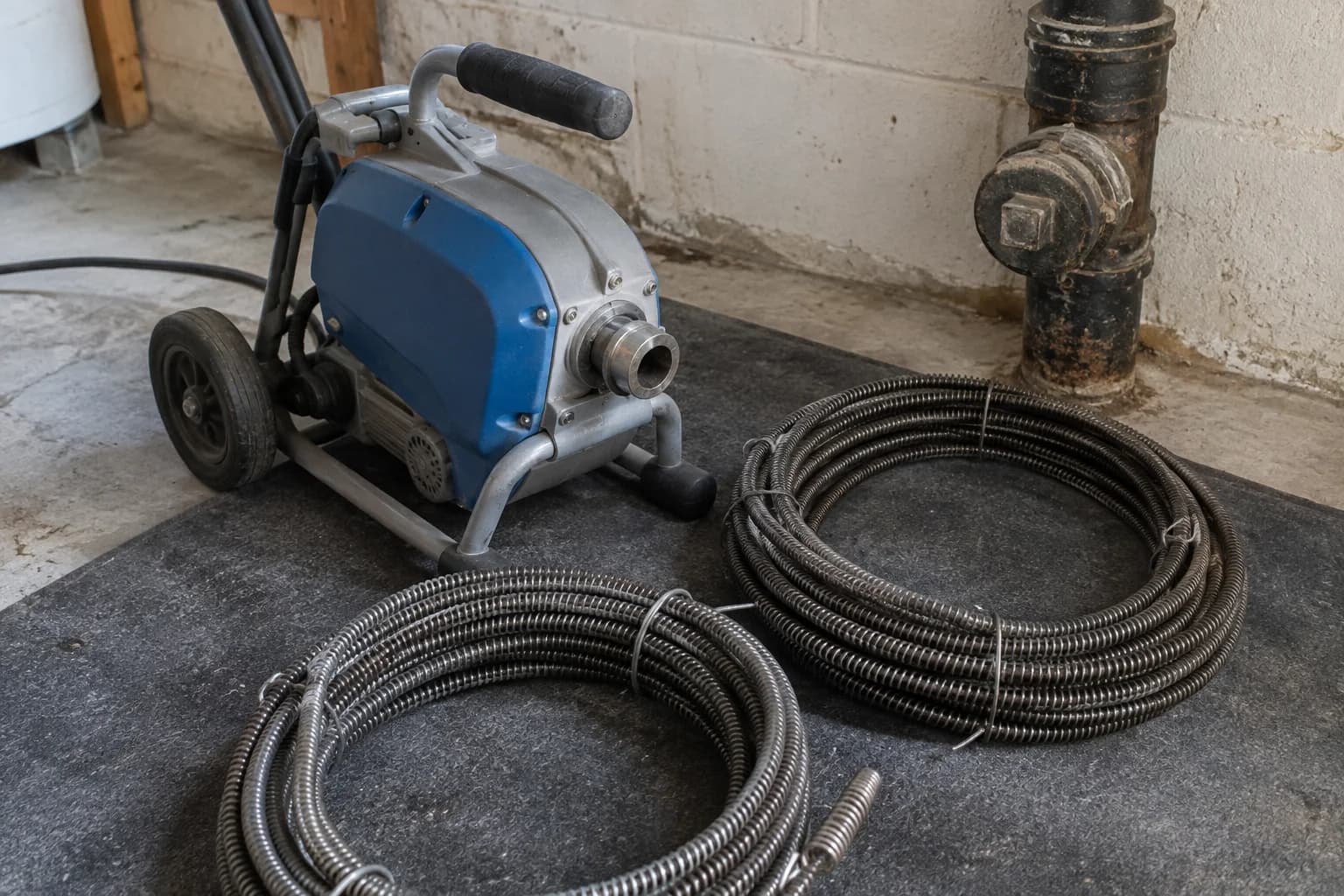
Sewer rodding uses suitable mechanical equipment to reach and address an obstruction in a drain or sewer. The useful outcome depends on the affected line, access, material encountered and condition. Opening a passage, cleaning a route and diagnosing the pipe are different objectives; confirm which the proposed service includes.
Key takeaways
- Rodding is a method of mechanical clearing.
- Tool selection depends on the actual line and obstruction.
- Flow restoration and structural assessment answer different questions.
What people mean by rodding, snaking and drain clearing
These terms overlap in everyday service requests. A contractor may use a flexible cable with an appropriate attachment to work through an obstruction. The exact equipment and access differ between a small fixture branch and a main sewer; the name alone does not establish that scope.
For homeowners, the important first step is naming the problem accurately. One slow sink, several affected bathrooms and wastewater rising from a basement floor drain can require different assessments. Our fixture versus main-sewer comparison explains how those patterns guide the conversation.
Four outcomes that should not be confused
A good service explanation connects the chosen method to one or more of these objectives.
| Objective | What it means | What it does not establish by itself |
|---|---|---|
| Restore passage | Allow wastewater to move through the serviced route | Every deposit is removed or every pipe surface is sound |
| Clean a defined section | Address material within an agreed route and scope | A structural condition has been repaired |
| Inspect the line | Document visible conditions in the reached section | Hidden or unreached areas are clear |
| Address a pipe condition | Perform separately defined corrective work | That it was included in a basic clearing quote |
Why the affected line comes before the equipment
A fixture obstruction may be close to the opening or within its branch. A shared restriction can affect several fixtures or cause wastewater to appear at a lower outlet. The contractor needs to identify the relevant route before selecting equipment and access.
Avoid ordering the largest machine or a particular attachment from an online description. Pipe size, bends, connection arrangement and observed condition all matter. Describe what happened and let the provider explain the method proposed for that actual route. See multiple drains clogged if several fixtures are involved.
Access shapes the work
A suitable cleanout can provide access for the intended service, but not every capped opening reaches every section. Its condition and connection matter. If another access approach is needed, the provider should explain the additional work and any limits it introduces.
Read the cleanout-access guide before a visit. Identify known locations and ordinary obstacles without opening a backed-up line. A line under backup conditions can release wastewater when opened; preparation should not involve testing the cap yourself.
What rodding may reveal about the obstruction
The work may encounter an object, roots or other material. Ask what was actually observed or recovered and whether the explanation is confirmed or still a possibility. A nearby tree or older house is not enough to establish the cause without evidence from the relevant line.
If roots are reported, the root-intrusion guide separates removing material from addressing its entry condition. If a pipe concern is raised, clog versus damaged pipe explains the evidence that should support a repair discussion.
When hydro jetting or inspection enters the conversation
A different cleaning method may be proposed when the objective or findings call for it. Water-jet cleaning can address suitable deposits, but it is not automatically required after every cable pass. A camera may help document the route when visibility and access permit a useful inspection.
Use rodding versus hydro jetting to compare purposes. Use inspection timing to understand why an inspection may come before, after or between stages of work. Each additional step should answer a defined question.
What the visit and quote should include
Confirm the line, entry point, method, intended outcome and included attempts or time. Ask how the original symptom will be checked and what happens if the initial work cannot complete the objective. Camera recording, locating or access work may be separately priced.
The service-visit guide walks through the appointment. The rodding cost guide explains the items to compare, while the duration guide separates arrival timing from the work itself. No universal price or completion time is assumed for an unseen property.
What to keep after service
Retain the affected line, access point, work performed, findings and verification in the invoice or report. Keep footage when included. Ask whether normal use can resume, whether any limitation remains and what the performing company’s return policy covers.
If the same symptoms return, the recurring-clog guide helps compare the new event with the previous scope. A return should prompt review of the evidence, not an automatic conclusion that every repeat needs the identical service or a whole-line replacement.
Arranging sewer rodding in Joliet
For service, use the Joliet sewer-rodding homepage and describe the affected fixtures, urgency and location. The network connects the request; the assigned contractor confirms availability, scope and terms. A request by itself is not an accepted appointment.
For active wastewater return, call emergency sewer and drain help and reduce contributing water use. For a stable maintenance or inspection question, use the callback form and have earlier records ready for the follow-up discussion.
Questions you may have
Is sewer rodding the same as snaking?
The words often overlap. Confirm the line, access, method and intended result rather than assuming the name defines a separate service.
Does rodding repair the sewer?
Mechanical clearing addresses an obstruction. A pipe repair is a separate scope supported by findings about the pipe condition.
Should the line be inspected after every clearing?
Ask what question inspection would answer in the actual situation. Recurrence or uncertain condition may make evidence useful, but camera work is not automatically included in every visit.
Will rodding prevent all future blockages?
No. The result relates to the serviced route and current scope. New material, recurring intrusion or other conditions may still require attention.